
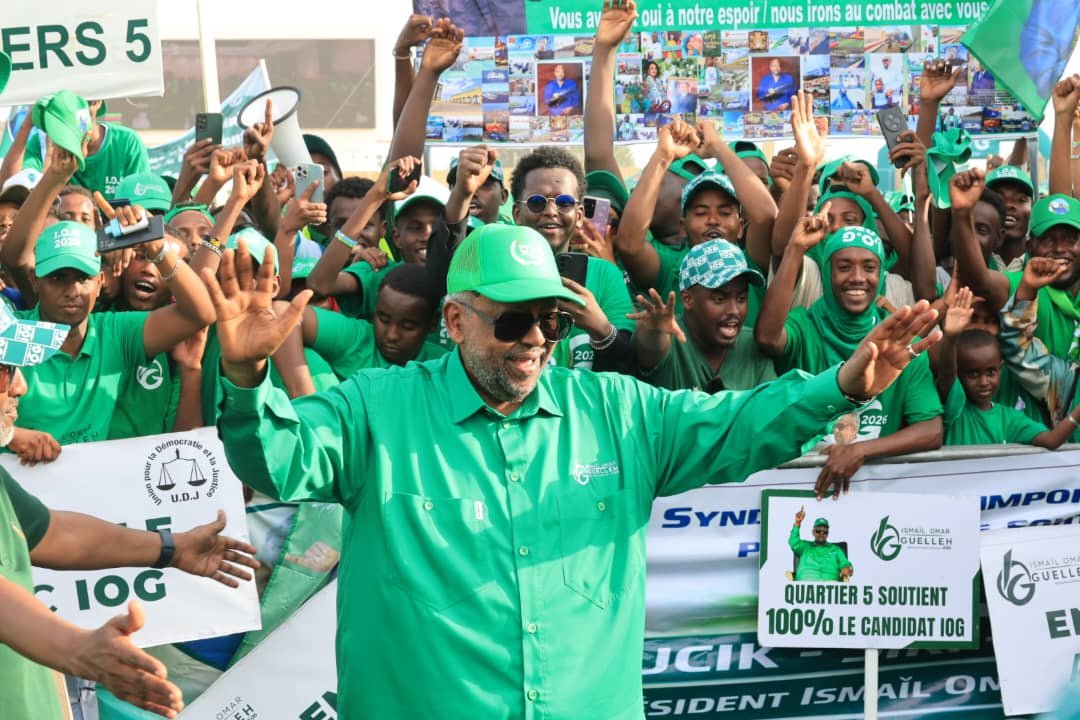
Voters in Djibouti headed to the polls on Friday to cast their ballots in a presidential election featuring incumbent Ismail Omar Guelleh and opposition candidate Mohamed Farah Samatar.
The vote is taking place over a single day in the strategically located nation near the Bab el-Mandeb Strait, following logistical preparations that included distributing ballots and election materials nationwide.
Continuity vs Change
Guelleh, who has been in power since 1999, is seeking a sixth five-year term as the candidate of the ruling Popular Rally for Progress party, after winning five consecutive elections, most recently in 2021.
His challenger, Samatar of the Unified Democratic Centre party, has campaigned on promises of political reform and improved living conditions, highlighting economic and social inequalities.
While the opposition has called for change, the incumbent has emphasized stability and continuity, urging voters to support ongoing development projects and the country’s international positioning.
Dominant Political System and Constitutional Debate
The election is held under a presidential system with direct voting every five years. The ruling coalition dominates parliament, which consists of 65 seats, giving the incumbent a strong political base.
Djibouti’s political balance traditionally reflects social power-sharing arrangements, with the presidency typically held by an Issa clan member and the prime minister drawn from the Afar community.
The vote follows a controversial constitutional amendment in October 2025 that removed the upper age limit for candidates, allowing Guelleh (78) to run again.
Opposition Boycott and Criticism
Several opposition parties have boycotted the election, arguing that the political environment does not allow for fair competition. They have called for electoral reforms, including an independent election commission and balanced media access.
Major opposition groups have maintained an election boycott since 2016, with critics suggesting the outcome is largely predetermined.
International Monitoring and Strategic Importance
Authorities say around 256,000 voters are registered out of a population of approximately 1.2 million, with the majority based in the capital.
International observers from organizations such as the African Union, IGAD, Organization of Islamic Cooperation, and Arab League are monitoring the process.
The election carries added significance due to Djibouti’s strategic location and its role as a hub for foreign military bases, making stability in the country critical for the wider Horn of Africa region.