
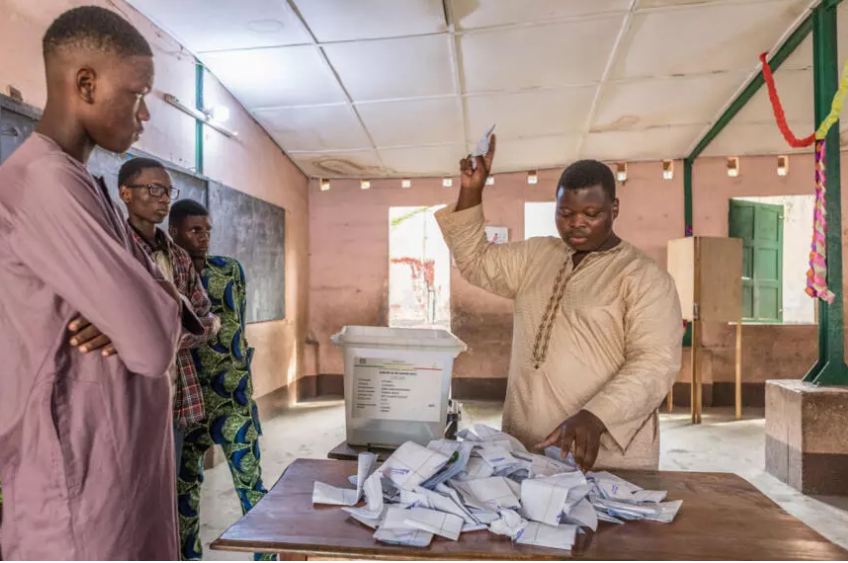
The presidential election campaign in Benin has entered its final phase, with candidates intensifying field activities just days ahead of the April 12 vote, amid signs of relatively low voter enthusiasm due to the limited range of political choices.
As the final week of campaigning began on April 6, voters are preparing to choose a successor to President Patrice Talon, who is set to step down after completing two constitutional terms.
The race is limited to two candidates: Romuald Wadagni, backed by the ruling majority and widely viewed as Talon’s political heir, and Paul Hounkpè, representing the opposition party “Forces Cauris for an Emerging Benin” (FCBE), which is considered a moderate opposition force.
Both candidates are conducting nationwide tours and rallies, including in northern regions that have recently experienced security incidents, in an effort to mobilize support ahead of election day.
Despite active campaigning on the ground and in the media, Wadagni appears to hold an advantage in terms of visibility and logistical backing, with his campaign materials prominently displayed in the main streets of the economic capital, Cotonou, compared to a more limited presence for his rival.
Wadagni’s performance has drawn particular scrutiny, given his technocratic background and the fact that this is his first bid for elected office. Observers note that he has successfully completed around thirty campaign stops without major setbacks, employing a mix of regional rallies and public events.
In contrast, Hounkpè, a seasoned politician, is focusing on social issues and advocating for a revival of the democratic process, which he argues has declined in recent years. He has also proposed initiating national consultations to reform the legal framework, including electoral laws.
While both candidates share common ground on certain issues—particularly strengthening security efforts and addressing everyday economic challenges—their differences lie in priorities and broader visions for the country’s future.
At the public level, there are indications of voter hesitation regarding participation, which analysts attribute to limited political pluralism, especially in light of the absence of the main opposition party, “The Democrats,” from the race.
As election day approaches, attention is increasingly focused on voter turnout as a key indicator of public sentiment in what is a low-competition race, yet one carrying significant implications for Benin’s post-Talon political landscape.