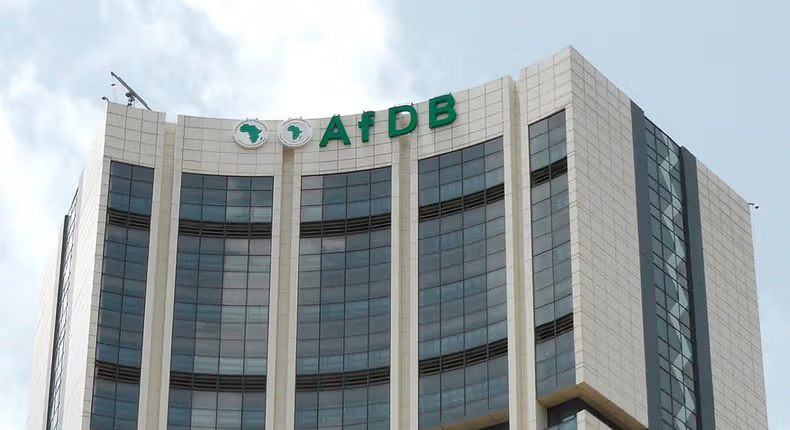
The African Development Bank has highlighted Africa’s significant untapped fiscal potential, estimating that improved tax systems and digitalization could generate an additional $469.4 billion annually between 2025 and 2029.
The projections were presented to African finance ministers during meetings held in Tangier, where the Bank’s Chief Economist, Kevin Urama, noted that the continent’s average tax-to-GDP ratio currently stands at just 18.4%.
According to the Bank, this ratio needs to increase to at least 27% to close an estimated annual financing gap of $402 billion—required to meet the Sustainable Development Goals and implement the African Union Agenda 2063.
Low tax collection across the continent is attributed to a range of structural challenges, including the large informal sector, weak enforcement mechanisms, fragmented data systems, and widespread tax evasion. In addition, Africa loses an estimated $587 billion annually through illicit financial flows—exceeding the total tax revenues collected in 2023.
These losses stem from activities such as illegal mining, unregulated trade, and profit shifting through international tax loopholes—areas that Urama emphasized are within governments’ capacity to address.
To tackle these challenges, the Bank urged governments to adopt advanced digital tools, including electronic payment platforms, unified taxpayer identification systems, and artificial intelligence to improve compliance. It also called for reducing ineffective tax exemptions and tightening rules on transfer pricing and capital flight.
These recommendations are supported by successful case studies across the continent. The Uganda Revenue Authority increased VAT revenues by 50% after introducing an electronic invoicing system in 2021, while Kenya recorded tax revenue growth of 11.1% in 2024 following improvements in digital compliance systems.
However, Nigeria faces more acute challenges, with its tax-to-GDP ratio remaining largely stagnant over the past decade at low levels. In response, President Bola Tinubu signed a comprehensive package of tax reforms in 2025, which came into force in early 2026, aiming to streamline the tax system and boost non-oil revenues.
The reform agenda seeks to increase non-oil revenues to 40% of GDP by 2030, though the Bank’s latest assessments suggest that substantial efforts will still be required to achieve this target.
The Bank also noted that it is currently implementing 31 domestic resource mobilization programs across 22 African countries and stands ready to provide financial and technical support. In March 2026, it approved a $5.52 million grant to strengthen tax administration in Nigeria and other West African countries, marking its first regional tax project under the West Africa Tax Administration Forum.