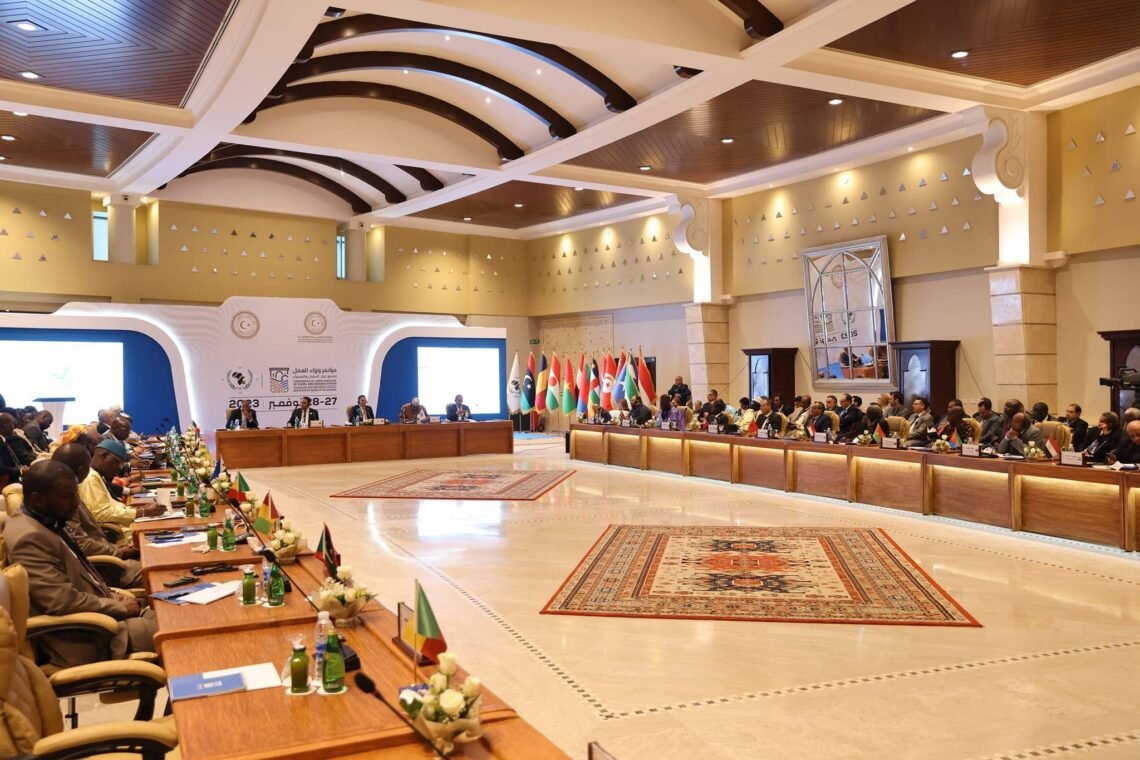
Senegal has reaffirmed its commitment to regional stability and cooperation among Sahel and Saharan countries during the official reopening of the Community of Sahel–Saharan States (CEN-SAD) headquarters in Tripoli.
Representing Senegal at the high-level meeting, Foreign Minister and Minister of African Integration Cheikh Niang emphasized the importance of revitalizing the organization at an institutional level to strengthen its capacity to address growing regional challenges.
The event evolved into a broader political dialogue focusing on the complex security, economic, and climate-related challenges currently affecting the Sahel region.
The reopening is seen as both a symbolic and practical step aimed at improving policy coordination among member states, enhancing freedom of movement, and strengthening regional development cooperation across the bloc.
On the sidelines of the meeting, Niang held diplomatic talks with Libyan Prime Minister Abdul Hamid Dbeibah and acting Foreign Minister Taher Salem Al-Baour. Discussions focused on bilateral relations between Dakar and Tripoli, particularly in areas of diplomacy, migration, and security cooperation.
Both sides stressed the importance of a unified approach to regional challenges, describing the reactivation of CEN-SAD as a key mechanism for advancing African solidarity and shared economic development.
The minister also met with representatives of the Senegalese community in Libya to discuss residency conditions, administrative procedures, and government support programs, including housing assistance and voluntary return initiatives.
Niang reiterated that the Senegalese diaspora remains a key pillar of national development and reaffirmed Dakar’s commitment to strengthening consular protection as part of its broader strategy to expand its influence within African regional organizations and bilateral partnerships.
CEN-SAD was founded in Tripoli in 1998 on the initiative of late Libyan leader Muammar Gaddafi. It brings together 25 African states and is recognized as one of the African Union’s regional economic communities. Following the 2011 Libyan uprising, its headquarters was relocated to N’Djamena, Chad.