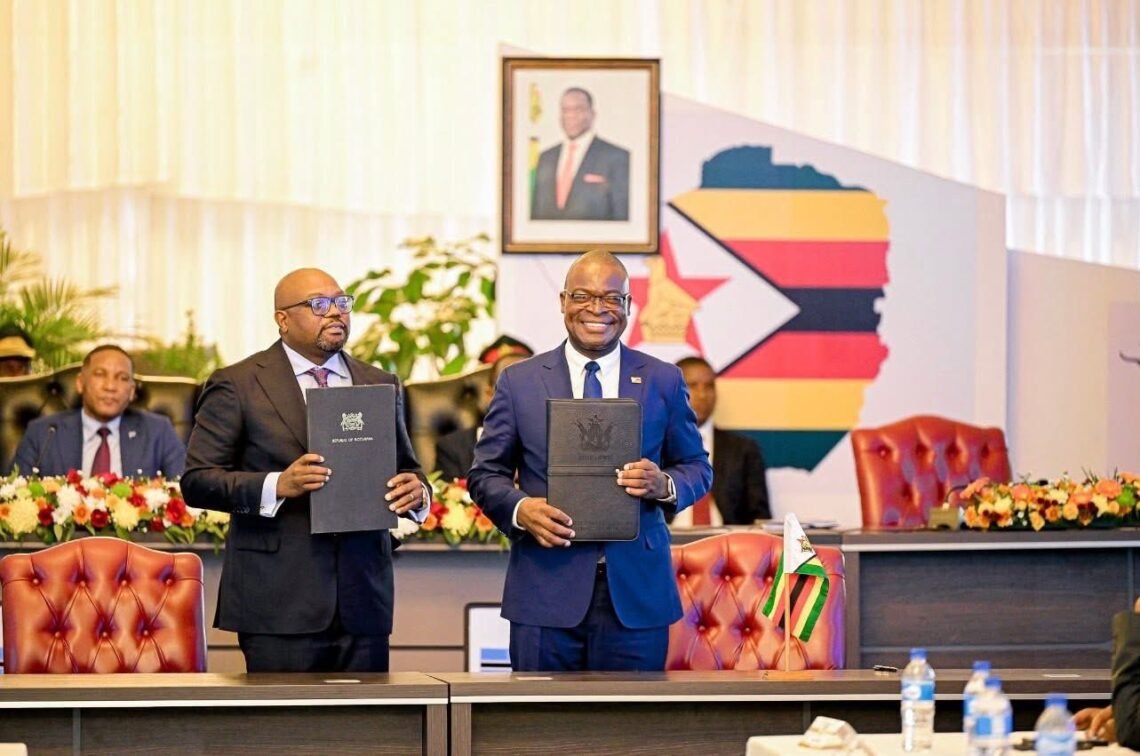
In a move signaling deepening regional integration, Zimbabwe and Botswana are set to allow their citizens to travel across borders using only national ID cards, eliminating the need for passports.
The plan was confirmed during the fifth session of the Joint Permanent Commission in Harare, attended by Presidents Emmerson Mnangagwa and Duma Boko, who reaffirmed their commitment to strengthening bilateral ties.
Beyond easing movement for people, the two countries signed a series of agreements aimed at facilitating the flow of goods and services across their shared border, boosting trade and economic cooperation.
Mnangagwa emphasized the economic benefits of the arrangement, noting it would enhance seamless mobility and strengthen long-standing relations. Boko described the policy as part of a broader regional vision to remove barriers and promote shared prosperity.
Additional agreements covered defense cooperation, border security, and investment promotion, reflecting a wider effort to align economic and security priorities.
This development is part of a broader continental shift toward easing travel restrictions. Ghana has expanded visa-free access for African nationals, while Kenya has progressively liberalized its entry rules, culminating in visa-free access for most African travelers in 2025.
These policies align with the goals of the African Continental Free Trade Area (AfCFTA), which seeks not only to reduce tariffs but also to enable the free movement of people as a key driver of a unified African market.
Meanwhile, Nigerian business magnate Aliko Dangote has called for opening borders across Africa, arguing that restrictive visa regimes continue to hinder intra-African trade and economic growth.
Despite the push for openness, governments remain cautious about security risks, particularly cross-border crime, prompting increased intelligence sharing and coordinated law enforcement efforts alongside eased travel measures.