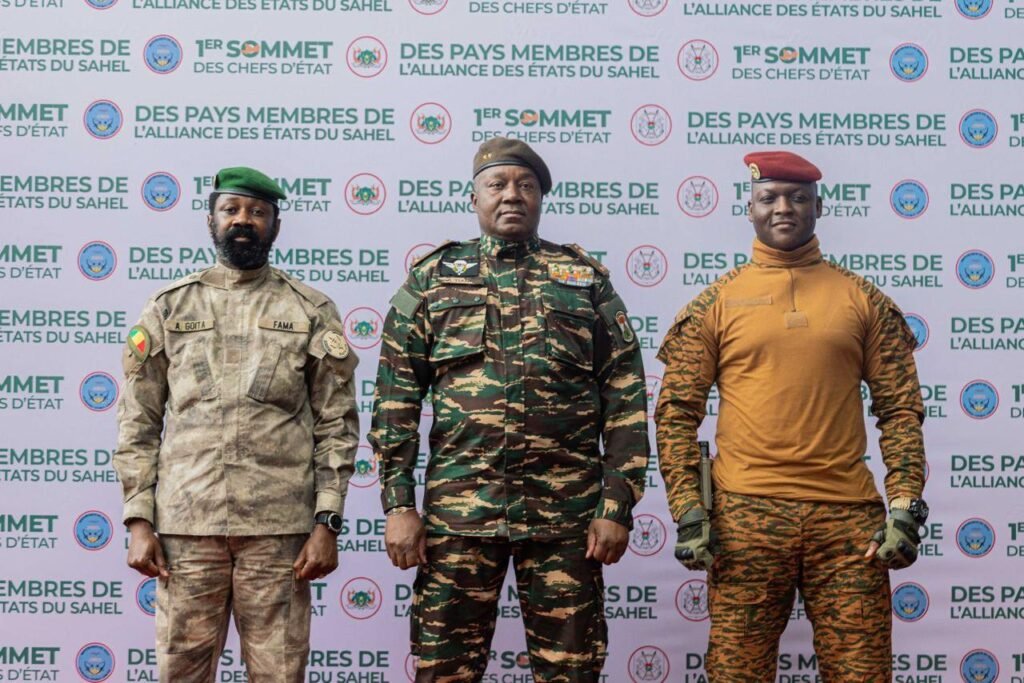
A high-level international meeting was held in Lomé, the capital of Togo, on Saturday, April 18, to discuss the development of a “new strategy for the Sahel region,” amid escalating security challenges and the growing spread of terrorist threats.
The meeting brought together representatives from the Economic Community of West African States (ECOWAS), alongside delegations from the Alliance of Sahel States, including Mali, Niger, and Burkina Faso, as well as representatives from the United Nations and prominent African and European political and diplomatic figures.
Participants agreed that strengthening regional and international coordination remains the most effective approach to addressing security threats and promoting stability. Discussions focused on the initiative proposed by Togo, which is built around several key pillars, most notably redefining cooperation frameworks between Northern countries and Sahel states to enhance counterterrorism effectiveness, in addition to strengthening political and security collaboration among concerned nations.
In this context, the European Union’s Special Representative for the Sahel, João Cravinho, expressed his support for the initiative, emphasizing the close link between Europe’s security and the stability of the Sahel, and highlighting the need for continued joint efforts based on shared interests.
On the sidelines of the meeting, Togo reportedly facilitated undisclosed bilateral talks between representatives of a European country and a Sahel state, in an effort to break political deadlock and open new avenues for rapprochement.
Participants also stressed the importance of pragmatic regional cooperation in confronting the expansion of armed groups, particularly as threats increasingly reach Gulf of Guinea countries. They further called for overcoming the lack of trust among ECOWAS member states, which remains a major obstacle to effective security coordination.
Through this initiative, Togo aims to position itself as a regional mediator bridging the gap between the Alliance of Sahel States and ECOWAS, especially in light of tensions following the withdrawal of Mali, Burkina Faso, and Niger from the regional bloc.
The initiative was welcomed by several parties, including Mali’s Foreign Minister Abdoulaye Diop, who underscored that bilateral cooperation can serve as a practical entry point for building trust. He pointed to existing cooperation between Mali and several regional countries, including Togo and Ghana.
Diop also called for a unified definition of terrorism, criticizing what he described as external support and financing of extremist groups, and stressing that addressing Sahel challenges requires a new approach based on deeper coordination and shared understanding among all stakeholders.