
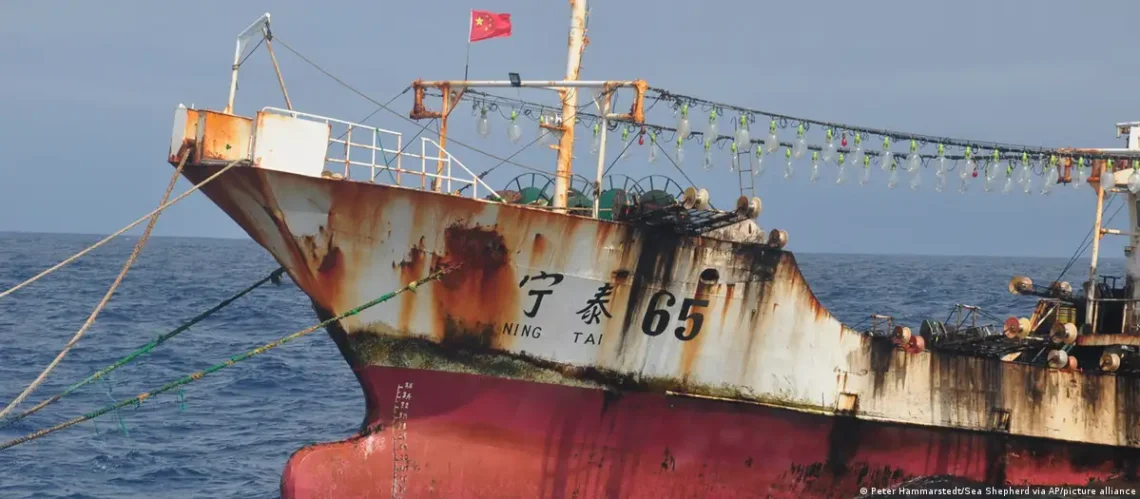
A recent investigative report has revealed the involvement of Chinese cargo vessels—officially classified as transport ships—in intensive fish processing activities at sea off the coast of Guinea-Bissau, far from shore and beyond the reach of official oversight. This has raised growing concerns over the depletion of local fish stocks and its direct impact on the economies of coastal communities.
According to a joint investigation by The Guardian and DeSmog, these vessels have been anchored for months near the Bijagós Islands, where they process large quantities of fish—particularly sardines—into fishmeal and fish oil for export, mainly for use in aquaculture and livestock industries.
The investigation indicated that these vessels engage in complex operations, including transshipment at sea and disabling tracking systems to evade inspections, alongside intensive fishing of small pelagic species.
This activity also relies on a shadowy parallel supply network involving multiple fishing fleets, including Turkish vessels, which frequently operate outside legal frameworks, enabling a full supply chain to function beyond the scrutiny of authorities.
The implications of these practices extend beyond environmental concerns, directly affecting local populations in Guinea-Bissau, where fish is the primary source of protein.
Available data points to a rapid decline in fish stocks, coupled with rising prices, which has harmed thousands of artisanal fishermen due to reduced catches and declining incomes, while also threatening the country’s food security.
This situation reflects a broader economic model based on extracting local resources and processing them offshore before integrating them into global supply chains for the benefit of foreign actors, thereby intensifying pressure on the domestic economy.
Despite a decree issued by authorities in Guinea-Bissau banning the activities of such vessels, enforcement remains limited due to insufficient maritime surveillance capabilities, raising questions about the government’s ability to assert sovereignty over its natural resources.