
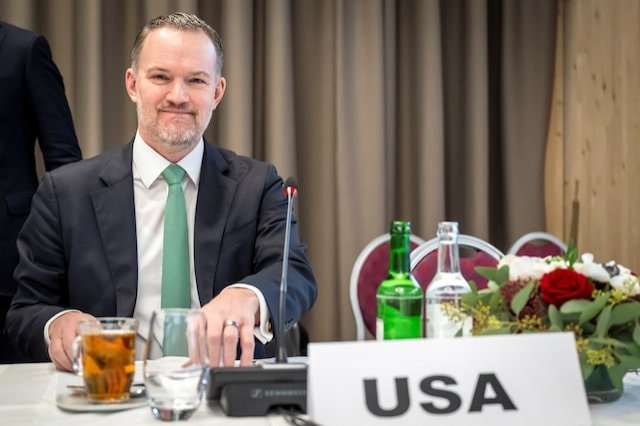
The United States’ chief trade negotiator announced that U.S. President Donald Trump signed a law on Tuesday extending a preferential trade program for Africa through 31 December, with retroactive effect from 30 September 2025.
U.S. Trade Representative Jamieson Greer said his office will work with Congress this year to update the program in a way that expands access to the U.S. market for American companies, farmers, and ranchers, in line with Trump’s “America First” trade policy.
The African Growth and Opportunity Act (AGOA), first enacted in 2000, grants eligible sub-Saharan African countries duty-free access to the U.S. market for more than 1,800 products. Its expiration in September raised concerns about the potential loss of hundreds of thousands of jobs across the continent.
As part of the legislative process, the U.S. House of Representatives approved a three-year extension of the law last month, but the Senate later reduced the extension to one year, a move subsequently approved by the House.
The extension comes at a time of strained relations between Washington and Pretoria. President Trump boycotted last year’s G20 summit hosted by South Africa, Africa’s largest economy, and later stated that South Africa would not be invited to G20 meetings hosted by the United States this year, after Washington assumed the group’s presidency in December.
South African Trade Minister Parks Tau welcomed the extension last month, saying it would provide “certainty and predictability” for African and American companies that rely on the program.
The Office of the U.S. Trade Representative said it will work with relevant agencies to implement any changes to the U.S. Harmonized Tariff Schedule resulting from the legislation reauthorizing AGOA.
The office added that, to benefit from AGOA’s duty-free preferences, countries must establish a market-based economy, uphold the rule of law, political pluralism, and due process, or demonstrate continuous progress toward these goals.
It also stressed that eligible countries must remove barriers to U.S. trade and investment and adopt effective policies to reduce poverty, combat corruption, and protect human rights.