
African Center for Consultancy
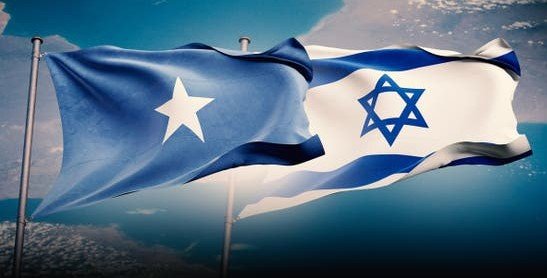
International relations in the Horn of Africa are highly complex, due to the region`s strategic location overlooking the Bab el-Mandeb Strait—one of the world`s most important maritime routes and a key arena for regional and international competition. In this context, Israel officially recognized the Somaliland region, a territory that declared its independence from Somalia in 1991. Despite relative stability and the governance of a de facto administration, Somaliland lacks broad international recognition, as the international community, the Arab League, and the African Union uphold the principle of “the inviolability of colonial-era borders.”
This Israeli decision can be better understood within the broader strategic and political shifts in Israel`s foreign policy in Africa over the past decade. Under Prime Minister Benjamin Netanyahu, Israel sought to break its diplomatic isolation, counter Iranian and Turkish influence, and build economic and security alliances in the region. Meanwhile, Somaliland has been seeking strategic partners to overcome the limitations of lacking international recognition and to access funding and development opportunities.
International Law Perspective
The United Nations Charter emphasizes the respect for state sovereignty and non-interference in internal affairs. While unilateral diplomatic recognition, as in the case of Israel and Somaliland, is not explicitly prohibited, it contradicts the internationally recognized principle of Somalia’s territorial integrity. The African Union and the Arab League rejected the recognition to preserve Somalia’s territorial unity and prevent the fragmentation of fragile states.
Israel’s Motivations for Recognition
Political motivations:
-
Breaking Israel’s political isolation resulting from the Palestinian conflict.
-
Countering Turkish and Egyptian influence in the Horn of Africa.
-
Forming strategic alliances with Ethiopia and Somaliland to secure access to the Red Sea and a port on the Gulf of Aden.
Security motivations:
-
Protecting Israeli interests in the Red Sea and Bab el-Mandeb, through which one-third of global trade passes.
-
Establishing a monitoring and intelligence-gathering platform to address threats from Iran-backed Houthi forces.
Economic motivations:
-
Controlling the strategic port of Berbera to enhance trade, particularly in natural gas.
-
Investing in infrastructure and mining, and exploiting Somaliland’s natural resources.
International Reactions
-
Somalia: The Somali government considered Israel’s recognition a clear violation of its territorial integrity and rejected any potential Israeli military bases or arrangements on its land.
-
United States: Did not endorse Israel’s recognition and rejected proposals for military bases in the region, despite being Israel’s closest ally.
-
African Union and European Union: Rejected the decision to maintain Somalia’s territorial unity and sovereignty.
Potential Implications
-
Forced relocation of Palestinians: Israel may offer to resettle Palestinians in Somaliland in exchange for international recognition.
-
Increased competition for influence: Israeli involvement could heighten regional tensions with Egypt, Turkey, and Iran.
-
Escalation of terrorist attacks: Cooperation with Somaliland may provoke groups like Al-Shabaab, potentially supported by the Houthis, to intensify attacks.
Possible Future Scenarios
-
Status quo: Israel’s recognition alone may not alter the international stance toward Somaliland due to Israel’s political isolation and international opposition.
-
Strategic exploitation: Israel could use recognition as a tool to secure partnership with Somaliland, counter Iranian influence, and protect maritime navigation.
-
Encouraging further recognition: With U.S. support, other countries might follow Israel’s lead in recognizing Somaliland, although this scenario depends on Washington’s actual backing.
Conclusion
Israel’s recognition of Somaliland is not merely a symbolic diplomatic move; it is a strategic maneuver aimed at strengthening political, security, and economic influence in the Horn of Africa. However, it faces broad international opposition and could trigger significant security and political repercussions in the region.