
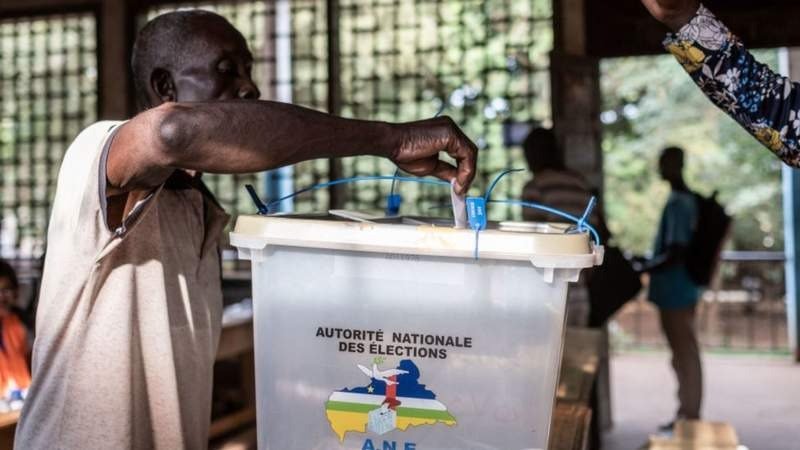
Vote counting and tabulation continue in the Central African Republic following the unprecedented quadruple elections held on December 28, which combined presidential, legislative, regional, and municipal polls, amid complex organizational and security conditions.
The elections were held in a sensitive political context, as outgoing President Faustin-Archange Touadéra seeks a third presidential term, while political forces and public opinion closely monitor the electoral process amid widespread anticipation and controversy.
After polling stations closed, the National Elections Authority began compiling results, with electoral materials transported—following delays in counting—to around 140 of its branches across the country, before being transferred to the capital, Bangui, under the supervision of the UN Multidimensional Integrated Stabilization Mission in the Central African Republic (MINUSCA). The process is expected to take several days.
Following the close of voting on December 28, the authority warned against the circulation of “misleading statistics and unofficial results,” stressing that no official figures, including turnout rates, had yet been announced. Civil society observers, however, estimated overall voter turnout to be “low.”
In contrast, President Touadéra’s campaign said in a statement issued on December 29 that the elections saw “broad participation” and described their organization and conduct as positive. Campaign spokesperson Évariste Ngamana said “early indicators place the head of state in a leading position.”
Opposition candidates rejected this narrative, most notably presidential candidate Henri-Marie Dondra, who said describing the elections as a “real success” does not reflect reality. He accused the organizers of committing “serious irregularities” and announced his intention to file formal complaints with the National Elections Authority.
Amid official assurances and opposition accusations, the quadruple elections remain deeply divisive, pending the announcement of preliminary results, with growing calls for transparency and credible, fair electoral processes.