
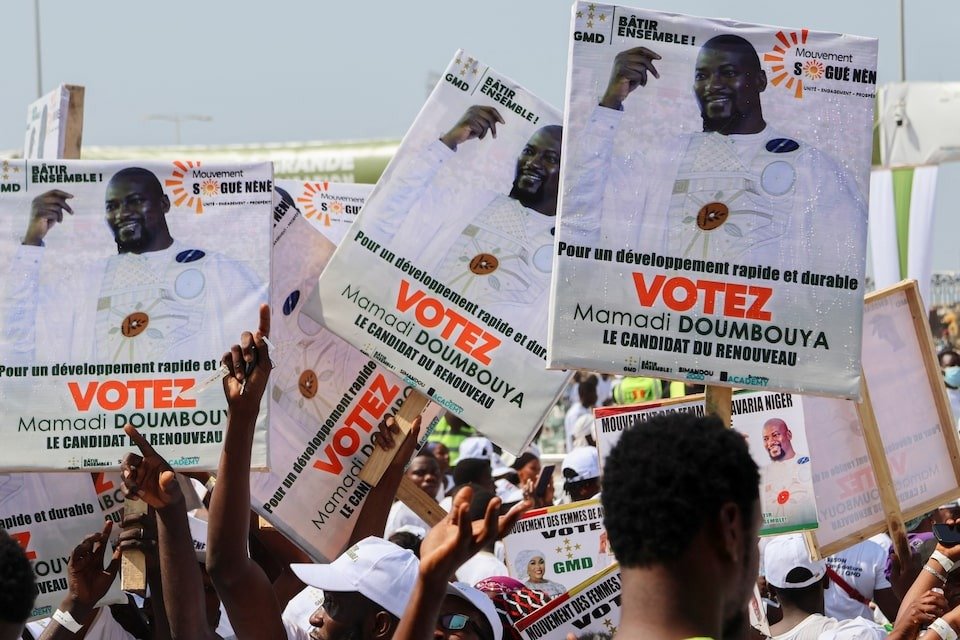
Guinea continues counting votes following the presidential election held on December 28, in which nearly seven million voters were called to choose a new president in what is seen as a pivotal vote that could end a four-year transitional period.
The election took place in a tense political climate dominated by General Mamady Doumbouya, who came to power through a military coup and is widely expected to win the vote.
About an hour after polling stations closed, the Director General of Elections, Djénibo Touré, announced that voter turnout had exceeded 85% of registered voters, sparking widespread skepticism among opposition groups and political actors.
Contrary to the official figures, accredited media outlets covering the election reported a different picture from the field, citing weak turnout at polling stations in several regions and describing participation as limited and uneven, with a noticeable lack of voter enthusiasm.
The Guinean opposition outright rejected the announced turnout rate, arguing that calls for a boycott were widely heeded. In this context, Souleymane Souza Konaté, head of communications for the National Alliance for Democratic Alternation, said the process amounted to a “staged political farce” aimed, in his words, at keeping General Doumbouya in power “through force and manipulation.”
Ahead of the vote, the UN High Commissioner for Human Rights had expressed concern over the intimidation of opponents, cases of enforced disappearances, and restrictions on media freedom, warning that such violations undermine the credibility of the electoral process and weaken public and international confidence in its outcome.
As the country awaits the final results, Guinea’s presidential election remains highly contested amid a sharp divide between the official narrative and opposition positions.