Translated from several sources
The Wall Street Journal quoted a White House official as saying that “the war in Sudan would have ended if not for the UAE". Intelligence documents and investigative reports issued by major Western media organizations have shown that the UAE continues to play a pivotal role in supporting and arming the Rapid Support militia in Sudan, through a complex system of supplies including Chinese weapons, re-exported British and Canadian equipment, as well as a highly efficient network of land and air routes stretching across Africa.
This military support coincides with Abu Dhabi`s attempts to present itself as a peace broker in Washington-sponsored negotiations, giving its role two contradictory dimensions, a hidden force that fuels war, and a preventive diplomacy protected by accountability. This behavior has re — highlighted the structural gaps in the Western arms export system, which has become an indirect tool for prolonging proxy wars in the region-especially in Sudan, where this pattern threatens the unity of the state, undermines the sovereignty of its institutions, and messes with the future of its people and generations, repeating what other countries have witnessed before.
Part one: direct Emirati arming of the militia – the Wall Street Journal (October 28, 2025)
The Wall Street Journal revealed in its report issued on October 28, 2025 that the UAE supplied the Rapid Support militia, accused of genocide and war crimes, with increasing amounts of weapons, including Chinese-made "CH-95" drones, light and heavy weapons, vehicles, artillery and ammunition, in one of the largest undeclared military supply operations in modern Africa.
The intelligence reports based on the newspaper – including reports from the US Defense Intelligence Agency and the State Department`s Intelligence Bureau – indicated that the UAE had begun supporting the militia two years ago through shipments sent to Chad under the guise of "humanitarian aid", which was considered at the time a symbolic step. But a qualitative shift took place this year when supplies were significantly doubled after the Rapid Support militia lost control of the capital Khartoum in March 2025. Abu Dhabi intervened to rearm the militia and save it from collapse, enabling it to regroup and launch a new large-scale offensive in Darfur.
US officials stressed that these shipments were crucial in prolonging the war. A former White House official was quoted as saying that “the war would have been over if it hadn`t been for the UAE”. Sources in Libya, Egypt and Europe also confirmed the authenticity of this information.
The newspaper pointed out that the "CH-95" aircraft supplied by the UAE to the militia were made by the China State Aerospace Industries Company (CASC), and are capable of carrying precision missiles and flying for more than 24 hours continuously, giving the militia an unprecedented reconnaissance and offensive capability. These aircraft were spotted in the skies over northern Darfur during rapid support attacks, according to data from the Yale University Institute for humanitarian research.
The newspaper pointed out that these weapons were being transported by air through Somalia and Libya before being delivered by land to Sudan, and that US intelligence identified the types of equipment through satellite images and communications interception. Although the UAE Ministry of Foreign Affairs "categorically" denied any role in arming the parties to the conflict, the facts on the ground showed that the militia regained its offensive capability after these supplies, and expanded its siege on the city of El Fasher in North Darfur, where more than a quarter of a million civilians are living in conditions of famine and siege.
Part two: recycling British gear across the UAE – The Guardian (October 28, 2025)
In an extensive investigation published by the British newspaper The Guardian on October 28, 2025, journalist Mark Townsend revealed documents and photographs seen by the UN Security Council showing that British-made military equipment was used by the Rapid Support militia in the battles of Khartoum and Omdurman, although those equipment were manufactured for training and defense technologies and exported to the UAE under official licenses from the British government.
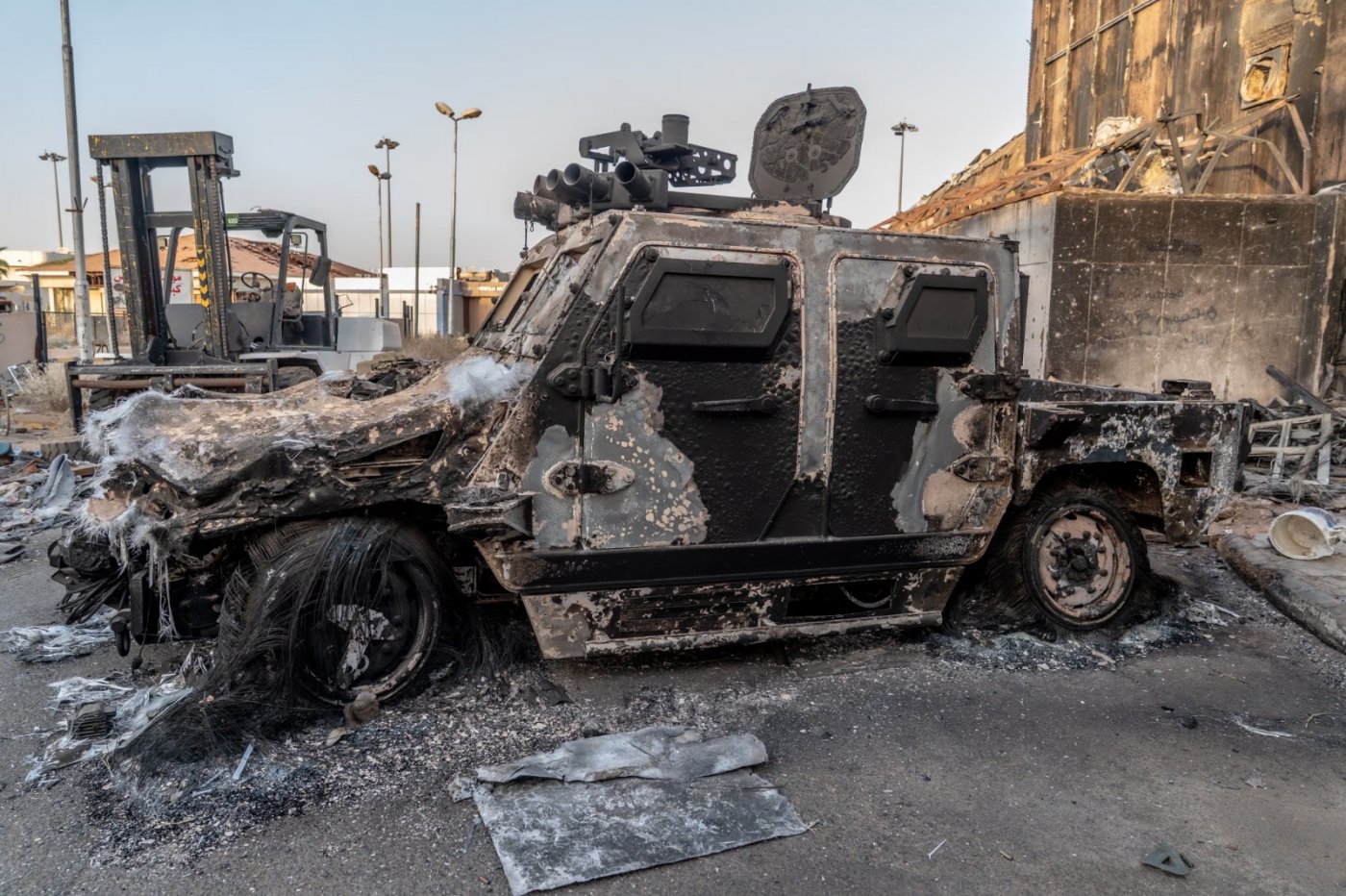
The evidence included light weapons training devices produced by the company" meltech "and British engines made by" Cummins", used in the armored personnel carriers" Nimr "produced by the Emirati group" edge". The documents showed that these exports were carried out under open individual Export licenses, which allow the export of unlimited quantities of equipment without monitoring the final destination or verifying end-user agreements, which created a legal loophole exploited by the UAE to re-export weapons freely without contractual or regulatory restrictions.
The files submitted to the Security Council in June 2024 and March 2025, which were prepared by the Sudanese government, included field evidence of UAE support for the militia, including identification plates for British-made “Cummins” engines on "Nimr" vehicles, and photos of training devices found at Rapid Support sites inside the capital.
The report confirmed that the British government continued to issue similar licenses even after the appearance of this evidence, and even granted in September 2024 a new open license of the same category "ML14" three months after the Security Council received the photos linking British equipment to the war in Sudan.
Researcher Mike Lewis, a member of the former UN Committee of experts on Sudan, pointed out that British and international law prohibits the export of weapons when there is a "clear risk of diversion". "The UAE has a documented record of transferring weapons to countries subject to arms embargoes and groups that violate international humanitarian law,"he added.
In support of this historical pattern, the investigation cited what the United Nations documented in 2013 when the UAE supplied Zintan militias in Libya with armored Tiger vehicles in violation of the UN arms embargo, and armed groups in Somalia supplied the same equipment. This recurring pattern reflects a long-term regional impact of the UK`s lax censorship, with Western-licensed hardware becoming a tool for fuelling conflicts in Africa and the Arab world.
The companies involved, such as "meltech" and "Cummins", confirmed their compliance with British control regulations and denied any involvement, but the investigation stressed that the essence of the problem lies in the system itself, which allows the export of defense equipment without a legal obligation to monitor its end-use.
Part III: Canadian armor and a recurring loophole – the globe and Mail (September 7, 2025)
The Canadian newspaper The Globe and Mail published in October 2025 a report revealing the appearance of "Gorkha" armored vehicles manufactured by Terradyne Armored Vehicles on the battlefields of Sudan, used by the Rapid Support militia.
The report pointed out that these vehicles, which were made in Ontario and sold to intermediary countries, most notably the UAE, were seen in videos from Darfur during the confrontations between the Sudanese army and the militia. The UN confirmed that some of these vehicles had previously been diverted to other conflict zones in the Horn of Africa and North Africa.
The investigation showed that the Canadian arms export system suffers from a loophole similar to its British counterpart, as it does not impose mandatory tracking of end-use after export, and does not restrict importing countries to binding end-user agreements. As a result, Canadian hardware can be re-exported without effective government supervision, which allows it to be used in prohibited disputes.
The report also quoted experts in arms trade control that the Canadian Ministry of Commerce has issued export licenses for armored vehicles over the past years "without sufficient scrutiny at the final destination", and that the federal government "does not have an effective mechanism to track the fate of vehicles after they leave Canadian territory". The manufacturer explained that it had complied with the law but was "not responsible after the sale", a statement that the newspaper commented on as "a legal loophole that almost matches the British style".
Part IV: diplomatic cover-up and an attempt to present Abu Dhabi as a mediator – Middle East Eye (October 27, 2025)
On October 27, 2025, Middle East Eye published a report entitled "Rapid Support militia storming El Fasher after the UAE suspended talks on the city," in which it explained that the attack on El Fasher began just hours after the collapse of ceasefire negotiations in Washington, in which the UAE was a key party.
The report quoted sources who participated in the talks that the UAE delegation explicitly refused to include the issue of the siege of El Fasher in the discussion agenda, despite the siege that has been going on for more than 500 days. This refusal led to the immediate failure of the negotiations, which allowed the Rapid Support forces to carry out their attack on the city shortly after the delegations left the US capital.
The report pointed out that the attack led to the militia taking control of a major military base in the city, and that about 260 thousand civilians are still trapped inside it under the threat of starvation.
According to the Wall Street Journal (October 28, 2025), the United States did not publicly mention the UAE`s role in arming the militia, despite having detailed intelligence on supplies, which Western officials interpreted as "deliberate avoidance of confrontation with a strategic partner in the Gulf".
The documents confirm that the UAE, which has invested billions of dollars in Sudan and is seeking to expand its influence on the Red Sea after the cancellation of the Sudanese port deal, is betting on the survival of rapid support as a field Force guaranteeing its economic and security interests. In return, it presents itself internationally as a"mediator of peace".
However, the Sudanese government officially refused to deal with the UAE as a mediator in the Washington talks, considering it an enemy party and directly involved in the war. Following the failure of the talks, the Sudanese Foreign Minister said that " the government does not consider the UAE to be a mediator, but an aggressor country that is actively participating in supporting the attack on the unity and sovereignty of Sudan, "according to MiddleEast.
Sudan had classified the UAE as a state of aggression last May through the security and Defense Council, stressing that what Abu Dhabi is doing represents an attack on the country`s sovereignty and national unity. Khartoum`s failure to accept any Emirati mediation role is consistent with the position announced by the Sudanese delegation during the talks that tried to pave the way for the Geneva platform last year, when it refused to include the UAE in any negotiating framework related to the conflict, as a participating party in the war and not a neutral party, and the Geneva talks collapsed.
Conclusion
Tracking the trajectory of weapons and military equipment in Sudan shows that the war has become a mirror of a global network of suppliers, intermediaries and legal loopholes. Chinese marches were carried by Emirati aircraft through Somalia and Libya, British equipment was re-exported without legal control, Canadian vehicles crossed the border in the absence of binding end-user agreements, while international diplomatic discourse continued to try with innocent insistence to present the UAE as a mediator in the very conflict that it is practically fueling, without any regard for Sudanese sovereign and security interests and concerns towards the unity of Sudan and the stability of the region.
The four reports — The Wall Street Journal (October 28, 2025), The Guardian (October 28, 2025), the globe and Mail (September 7, 2025), and Middle East Eye (October 28, 2025) — together present an integrated picture of one pattern about the circulation of Western weapons through the UAE portal to its wars in African and Arab countries, taking advantage of legal loopholes and a loose export system that gives companies and countries a wide space of denial, turning official licenses into tools for perpetuating conflicts. This pattern is complemented by the role of large influence and lobbies spread on both sides of the Atlantic, working to protect Abu Dhabi from any condemnation, as well as accounting or exerting pressure to stop the ongoing atrocities.
Periodical publications
The UAE is recycling Western weapons in its war against Sudan
01/11/2025
Recent news
- 31/03/2026African Development Bank: Growth Risks in Africa Tilt to the Downside
- 31/03/2026Chinese Vice President Concludes Intensive African Tour
- 31/03/2026Ethiopia to Host the Fifth International Conference on Public Health in Africa
- 24/03/2026Senegal and Spain Discuss Expanding Areas of Joint Cooperation
- 24/03/2026Three African Countries Eye Debt-for-Nature Swaps
- 24/03/2026Namibia Rejects Starlink’s Telecom License Application