
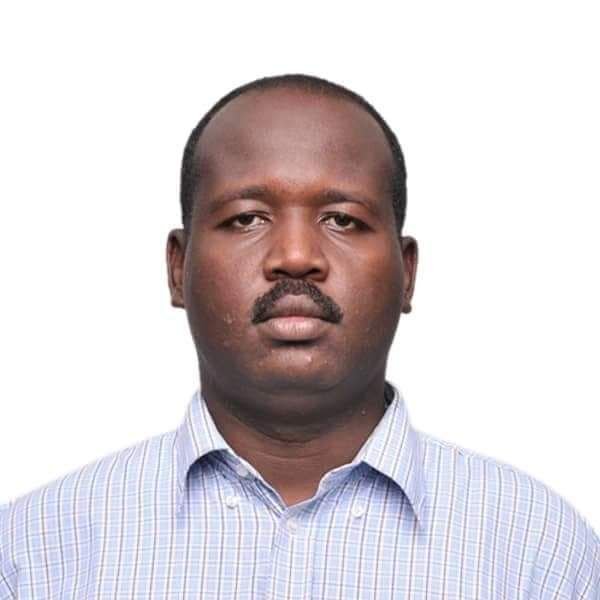
Dr. Mehmet Turchin
Researcher and writer on African Affairs
Some African countries suffering from armed conflicts today are living on the impact of profound security transformations, with an acceleration in the use of militias and mercenaries as an actor in internal wars. This transformation not only reflects a change in the balance of power, but also opens the way for the formulation of the security system in African countries according to New determinants that go beyond the traditional model associated with the achievement of security and stability by regular armies.
Recently, the issue of militias and mercenaries has almost become a phenomenon that has exhausted governments and armies, which has reflected on the ability of African countries to achieve regional security. These irregular forces have contributed to destabilizing the security and stability of the African continent.
Militias and mercenaries in Africa: Genesis, Development and forms
The genesis of militias and mercenaries in Africa can be traced back to the pre-independence era, when European colonial powers used domestic and foreign arms to control the colonies and put down revolutions and national liberation movements. With independence, African countries inherited weak and fragile armies that were unable to impose state authority over their entire territory, as well as the aggravation of some socio-political problems, which created a favorable climate for the emergence of militias.
As the Cold War escalated in the seventies and eighties, mercenaries were used as tools by the major powers. The most striking example of this is the military activity of the "Bob Dennard" group in the Comoros, Angola and the Democratic Republic of the Congo, where foreign mercenaries were engaged in militias and military factions.
In the nineties, the African continent experienced significant geopolitical transformations, as militias became an influential actor in the political scene in Somalia, Sierra Leone, Liberia and the Congo.
Moreover, private military companies have emerged to act as a legal front for mercenaries, exploiting internal conflicts and taking advantage of natural resources such as diamonds and gold.
Types of militias and mercenaries in Africa
Militias and mercenaries in Africa have diversified by goals and affiliations into three main types:
First: local militias
These militias arise on ethnic, racial, religious and sometimes political grounds, and operate within limited areas to defend the interests of their groups or to control resources. The most prominent examples are the "Mai-Mai forces"in the Democratic Republic of Congo, the" border guards (Janjaweed)", the armed movements in Darfur and the Nuba Mountains in Sudan, the" al-Shabaab Mujahideen movement "in Somalia, as well as Boko Haram in the Lake Chad Basin, as well as the" anti-Blacka "in the Central African Republic. Such militias usually have a paramilitary organizational structure and combat capabilities, but they lack legal legitimacy.
Second: foreign mercenaries
They are individuals or groups that provide combat services for money, without attachment to national identity. Mercenaries have contributed to multiple conflicts over the decades in countries such as Angola, Congo, Libya, Mali and Sudan. Their activity is usually associated with local factions that have External links, reflecting an overlap between foreign and local powers in conflict zones.
Third: security companies
These companies represent a relatively legal form of mercenaries, operating under official contracts with states or enterprises, providing specialized security and military services. The most prominent of these companies are: "Wagner","Blackwater","Sandline international"(Sandline International), "Executive Outcomes" (Executive Outcomes), these companies operate in multiple sectors including military training, arms supply, security protection, consulting, and have been closely associated with complex conflicts on the African continent, taking advantage of its natural resources and existing conflicts to enhance their presence and influence.
Factors and motives of the spread of militias and mercenaries
The issue of mercenaries and militias in Africa is a complex issue in which political, economic and social factors overlap, making the continent a fertile arena for the spread of armed non-state actors.
This is mainly due to the fragility of African states and the weakness of their security and political institutions, as many governments are unable to extend their sovereignty over their entire territory or provide basic services to citizens, creating a security vacuum exploited by armed groups.
In some cases, governments themselves use militias or mercenaries to ensure that they remain in power.
In addition, the economic factor is a major driver of the spread of the phenomenon, as extreme poverty, the absence of job opportunities and poor development are a motivation to join the ranks of militias or mercenaries, where they find a better income than other alternatives.
Natural resources such as gold, diamonds and precious metals also play a major role in fueling conflicts, as militias and mercenaries seek to control them or use them as a negotiating tool with local or regional powers.
At the socio-cultural level, ethnic, tribal and ethnic divisions remain a key factor in provoking conflicts and recruiting fighters, as the feeling of marginalization and exclusion is exploited to build armed loyalties. To this is added the colonial legacy that left behind artificial borders and weak governance structures, which made ethnic, tribal and ethnic affiliations stronger than national identity, and therefore more vulnerable to recruitment by militias.
Security and political impact
The first repercussions of militias and mercenaries are manifested in the security dimension, as the presence of these entities leads to a significant doubling of the levels of armed violence. Militias are often motivated by the control of spheres of influence or natural resources, while mercenaries, thanks to their military experience and sophisticated armament, add a bloodier and more complex dimension to conflicts, making them expand and turn into protracted wars that are difficult to contain.
The dilemma of militias and mercenaries also undermines the essence of the modern state, which is the legitimate monopoly of violence. When there are multiple armed actors competing for control, the state loses its ability to extend its sovereignty, and the people find themselves in front of multiple and diverse sources of power that have a significant impact on state institutions. Therefore, governments have become unable to confront these entities, but have resorted to living with them or even using them to protect their survival at the helm of government, which reflects a structural imbalance in the national security system.
Besides, the proliferation of militias and mercenaries fuels organized and transnational crime networks. These factions ` activities are not limited to fighting, but also extend to the issues of smuggling gold, diamonds, metals, weapons, drugs and human trafficking, thus possessing huge sources of funding that promote the continuation of conflicts.
The humanitarian consequences of these situations cannot be overlooked, as armed confrontations lead to mass displacement and asylum, creating fragile environments capable of reproducing violence, whether through forced recruitment or exploiting conditions of poverty and deprivation, which constitutes a fertile ground for the growing proliferation of militias and their activities.
At the regional level, the presence of militias undermines any joint cooperation, as armed groups easily move across borders taking advantage of security fragility, making some areas such as the African coast, the Great Lakes and the Horn of Africa an open hotbed for multi-loyalist militias.
While the security implications of militias and mercenaries are clear and influential, the political dimensions are more complex and profound, as the existence of these groups leads to a weakening of the legitimacy of the state. A state that cannot protect its citizens and does not control its territory is gradually losing the trust of the people.
The crisis of legitimacy becomes even more serious when governments themselves engage in alliances with militias or use mercenaries to ensure their continuity, transforming themselves from a guarantor of security to a party to the conflict.
In the stages of political transition, militias often turn into pressure tools used by political forces to influence the balance of influence in their favor, while mercenaries play a role in supporting authoritarian regimes in exchange for economic contracts or concessions for the exploration of strategic minerals. Thus, militias and mercenaries become a tool for aborting the democratic transition, which leads to the consolidation of authoritarianism.
The presence of private security companies or mercenary forces linked to international powers makes African conflicts part of geopolitical competition. This is evidenced by the involvement of the Russian "Wagner" group in the African Sahel and Central Africa, where these interventions were associated with the struggle for influence between Russia, France and the USA.
These dynamics lead to the militarization of political life, as some militias succeed in becoming legitimate political actors through peace agreements or imposing a fait accompli, as is the case of the Rapid Support forces in Sudan, which leads to the integration of the logic of arms into politics.
In addition, regional institutions such as the African Union have been unable to deal effectively with the issue of militias and mercenaries, making them one of the most prominent factors threatening stability and security on the African continent.
Democratic Republic of Congo... an open arena for militia and mercenary Wars
The Democratic Republic of the Congo is one of the most expressive examples of threats to stability caused by militias and mercenaries, because it includes ethnic, economic and regional overlaps that make it a complex and complex example. The country has suffered from fragile security and instability, and has not known sustainable peace since its independence in 1960.
The territories of North and South Kivu have become an open arena for local and regional conflicts in which ethnic militias, rebel factions and mercenaries overlap, driven by complex economic and political interests. The abundance of precious metals such as gold, diamonds and coltan is one of the most prominent sources of financing for armed groups, which number more than 100 factions, most notably the movement "March 23" supported by Rwanda, the Democratic Forces and others.
The increasing influence of militias and the intervention of Mercenaries has led to a deterioration in the humanitarian situation, as repeated attacks have killed thousands of civilians and displaced millions inside and outside the country, with widespread violations such as rape, kidnapping and looting of property. This reality has also weakened the state`s ability to extend its control and deepened the loss of trust between citizens and the government, in light of mutual regional interventions that complicate the scene and turn the conflict into a cross-border crisis.
The continuation of the conflict has also disrupted development, destroyed infrastructure and widened poverty, leaving young people vulnerable to recruitment into armed groups. The crisis of militias and mercenaries in the Democratic Republic of the Congo cannot be solved by military means alone, but requires a comprehensive approach that addresses the roots of the crisis, achieves transitional justice, reconstructs what was destroyed by the war, and rebuilds state institutions.
Conclusion
It can be said that militias and mercenaries represent one of the most serious threats to stability on the African continent, as their effects are not limited only to the security aspect, but also extend to undermining the foundations of the state and weakening its institutions.
The proliferation of militias and mercenaries and their multiple allegiances make many African countries — such as Congo, Sudan and the Sahel — open arenas for complex proxy conflicts. Experience has shown that poor development, the absence of good governance and the politicization of ethnic and racial affiliations are all factors that fuel the militia phenomenon and provide a fertile environment for mercenaries.
Therefore, addressing these threats requires a comprehensive approach that goes beyond military solutions, focusing on building strong state institutions, promoting justice, ensuring a fair distribution of resources and wealth, and reforming political life by establishing the principle of peaceful circulation of power.