Reported by The Africa Report
Kenya bounces back and francophone hubs rise as investors tighten their purse strings. Meet the new wave of founders plugging the continent’s infrastructure gaps against the odds.
A selective silver lining. At first glance, 2025 was a highly respectable year for African startup founders, with funding jumping more than 25% over the past 12 months. A total of $4.6bn was raised in 2025. Yet a second look at the ‘2025 Africa Tech Venture Capital Report’ by Partech Africa – one of the continent’s most recognised venture capital (VC) investors, co-directed by Tidjane Dème – calls for caution.
The influx of capital stems largely from a specific segment: debt. This increased by 63% compared with 2024, accounting for $1.6bn. This more cautious funding method guarantees regular returns for creditors but remains poorly suited to early-stage startups (pre-seed and seed), which are particularly capital-intensive. These younger companies now face far stricter screening from investors.
“The data shows a market transformation, with a strong concentration of capital on larger ticket sizes and more mature businesses,” says Maxime Bayen, operating partner at Catalyst Fund.
“This is driven by the withdrawal of some early-stage players, a heightened perception of risk, and a growing reliance on public funding or grants at the pre-seed level. This pushes VCs to favour de-risked profiles rather than feeding the base of the pyramid,” says the expert, who co-founded Africa: The Big Deal, a database tracking the continent’s tech funding.
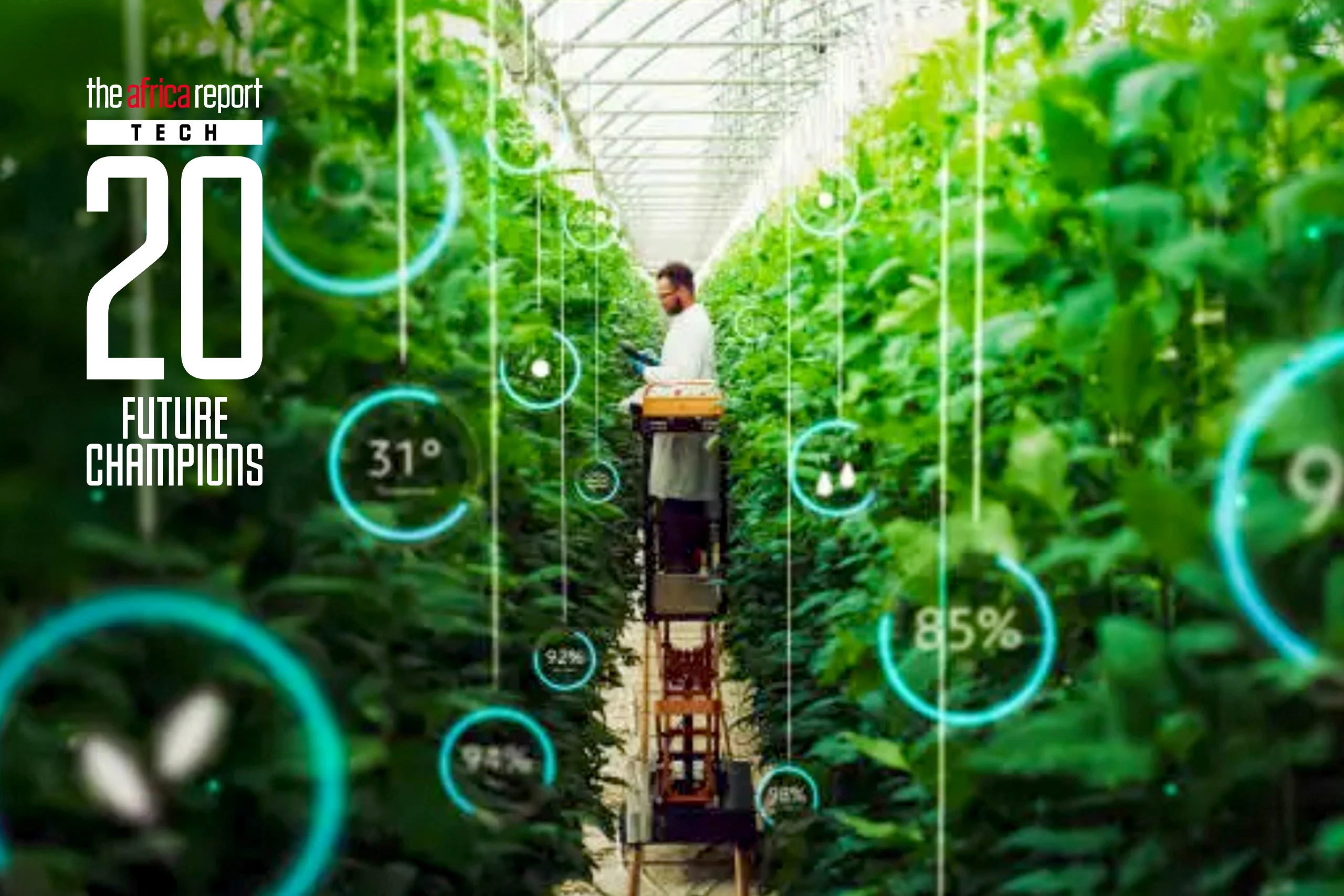
This top-heavy concentration was palpable while compiling our 2026 list of the 20 future champions of African tech. This year, more than ever, the question of startup renewal has come sharply into focus, as evidenced by several metrics, with results that offer revealing insights.
Plugging the infrastructure gap
The first takeaway is the enduring strength of fintech models, which now display advanced sophistication – much like Credable. Founded by Nadeem Juma, Jad Abbas, and Michael Tarimo in 2021, the company is already active in three East African countries and relies on an embedded finance (B2B2C) model.
This positioning, focused as much on financial infrastructure as on consumer apps, reflects a continental reality: plugging the tech infrastructure gap often takes precedence over direct-to-consumer solutions.
This logic of connecting banks, telecoms operators, and tech platforms is shared by several of our champions this year, including Kenya’s VunaPay and HoneyCoin, and Sudan’s Cashi. The latter was specifically designed in 2022 by entrepreneur Tarneem Saeed to support her marketplace, Alsoug, launched in 2016. This year’s results show fintech is once again highly prized by investors, bouncing back from a surprising dip in our 2025 edition.
The second lesson is the undeniable appeal of agritech, championed by players like YoLa Fresh, MazaoHub, and Agrails, which provides real-time climate data and predictive analytics. These firms offer the dual advantage of combining social impact with massive market volume in a sector struggling to meet ever-rising demand driven by population dynamics.
Models built around logistics and supply chains are emerging as another major pillar. Egypt’s Khazenly, launched in Cairo in 2021 by Mohamed Younes, Osama Aljammali, Mohamed Montasser, and Ahmed Dewidar, managed to raise $2.5m in its first year to industrialise its e-commerce one-stop shop.
Finally, healthtech remains a darling of pan-African VCs. Standouts include Tanél Health, cited by several of our respondents, Verascient, and notably Kera Health, an AI-driven e-health solution founded by Moustapha Cissé that raised $10m in June 2025.
Kenya`s comeback
Geographically, Kenya is the clear breakout, with five startups making the list this year.
It marks a strong return for the Silicon Savannah, which leads the continent in total funding ($1.04bn) according to Partech data. This – at least temporarily – eclipses its peers in the ‘Big Four’ (Nigeria, Kenya, Egypt, and South Africa), the markets most favoured by investors.
Our 2026 list features only two South African representatives and just one from Egypt, a country that hosted a quarter of the 20 startups in our previous edition.
Another striking takeaway is the apparent sluggishness of the Nigerian giant. Only one company under five years old – and not previously featured in our lists – was highlighted by surveyed investors: the sustainable energy solutions provider Powerlabs. This dry spell raises questions about the country`s ability to foster new shoots in the shadow of its well-established behemoths, which act as veritable capital vacuums – such as Moniepoint, which secured another $200m in a resounding Series C round in October 2025.
Maxime Bayen nuances this picture saying: “Nigeria remains the country with the most startups capable of raising more than $100,000, with 86 deals in 2025. However, it has recorded a significant drop in funding volume [down 17% year-on-year] and its share of the continental total has fallen to 11%, its lowest historical rate.”
Morocco and Senegal lead the francophone zone
Morocco is riding highly favourable winds, placing six startups on our list.
Health models like DeepEcho are turning heads, while others are hitting massive valuations early on.
Proptech firm Yakeey raised $15m in early 2026. This signals that the kingdom’s efforts to structure a training and support ecosystem, and attract both brains and backers, are paying off – notably through UM6P Ventures, which supported DeepEcho in its early days.
Yet, despite this incentivised framework, Morocco struggles to convince all its champions to base their headquarters in the kingdom. Founders prefer to set up shop where the investors are. “Morocco is currently attracting attention but remains a market that needs consolidation,” says Tamim El Zein, general partner at Seedstars Africa Ventures.
In practice, some opt for a hybrid setup, like Journify, which is headquartered in Dubai but relies on a tech team in Morocco, home to its co-founders Taoufik El Jamali, Omar AlShoubaki, and Amine Chouki. DeepEcho has taken a similar route, spreading its management across the US, Spain and Morocco.
Senegal also emerges as a serious contender in the francophone zone, albeit one lacking full maturity. “The country benefits from solid fundamentals, a structured public ecosystem [DER, Digital Africa], a natural positioning as a francophone hub, and the presence of regional champions. The trajectory is positive, but still reliant on ad-hoc deals,’ says Bayen, recalling the dominance of Wave and its $117m raise in June 2025.
One certainty: the VC crosshairs are gradually widening, with two new countries climbing into our list this year. Guinea makes its debut with the fintech Cauridor. Its technological infrastructure has won over players like Ria and MoneyGram, alongside operators such as MTN and Orange.
The startup is on track to raise tens of millions of dollars, as revealed by Africa Business+ in November 2025. For the first time, Tanzania also features in our ranking, represented by MazaoHub, which offers soil analysis, specialised agronomic services and input distribution.
The critical criteria of teams
More than ever, the quality and experience of leadership teams remain central to the strategies of venture capitalists, who are themselves accountable to their own, increasingly conservative, investors.
The market has professionalised, but there are still few teams capable of meeting institutional requirements
Beyond Khazenly’s business model, the background of its founder, Mohamed Younes – a veteran of IBM and Huawei – certainly strengthened its pitch. The same goes for Kera Health, where CEO Moustapha Cissé, former head of Google’s AI research lab in Africa, wisely flanked himself with Papa Sow, a former MTN senior executive, to direct operations, and an ex-Axa Africa manager, Hosam Mattar, for marketing.
These team reinforcements are essential milestones for a startup looking to convert its early promise and secure subsequent stages of development. This is especially true when navigating an environment that has grown significantly tougher in recent times.
A general tightening
“The years 2021 and 2022 represented a boom and were prolific for investment in Africa. But today, access to capital remains extremely limited, making entrepreneurial journeys more complex,” says El Zein, who currently holds seven startups in his portfolio.
Indeed, the post-Covid-19 boom years are firmly in the past, accompanied by a drying up on the VC side as well.
Many funds have failed to withstand the test of time and the financial prerequisites – payrolls and deadlines – that running a fund demands. “The market has consolidated and professionalised, but today there are still few teams capable of meeting institutional requirements. You can’t just improvise being a fund manager,” El Zein says.
It is a healthy clarification and culling, but one that raises questions about the opportunities available to Africa’s future champions.